
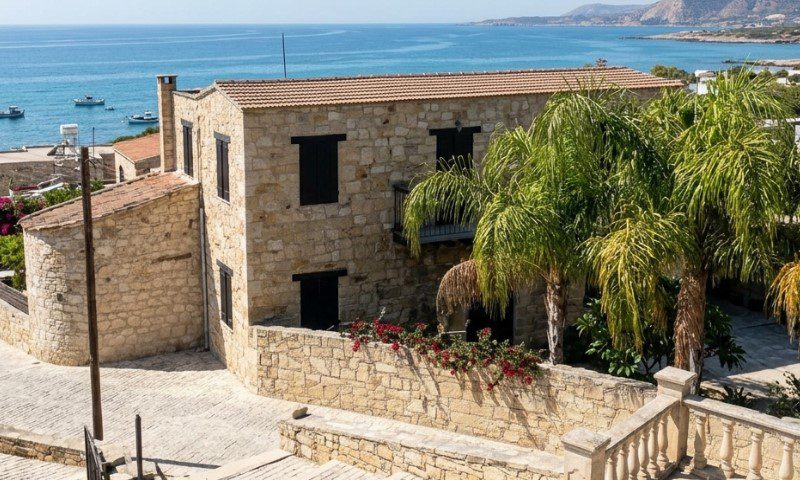
Cyprus is an island nation in the eastern Mediterranean Sea, shaped by geography, conquest, climate, trade, religion, and available materials.
Because Cyprus lies in a seismically active zone, its architecture must be studied as both heritage and structure.
Architecture in Cyprus records cultural exchange, political control, material choices, climate response, and seismic vulnerability.
Builders used stone, clay, timber, mudbrick, tile, concrete, steel, and glass according to each era’s needs and technical limits.
Main periods covered are the Venetian period, Ottoman period, British Colonial period, post-independence Greek-Cypriot period, and modern construction.
Key Takeaway Summary
Cyprus architecture has evolved with each era’s needs:
Venetian buildings prioritized defense and heavy stone fortifications.
Ottoman and traditional Cypriot homes emphasized courtyards, shade, privacy, and local materials.
British colonial architecture added administration, infrastructure, and planning, and post-independence construction expanded through reinforced concrete and urban growth.
Today, rising property interest and tourism-driven demand have made modern systems more attractive, which is why Elythera metal frame houses in Cyprus are part of the island’s current shift toward increased residential construction, and tourist capacities.
Venetian Fortification, Defense, and Urban Form
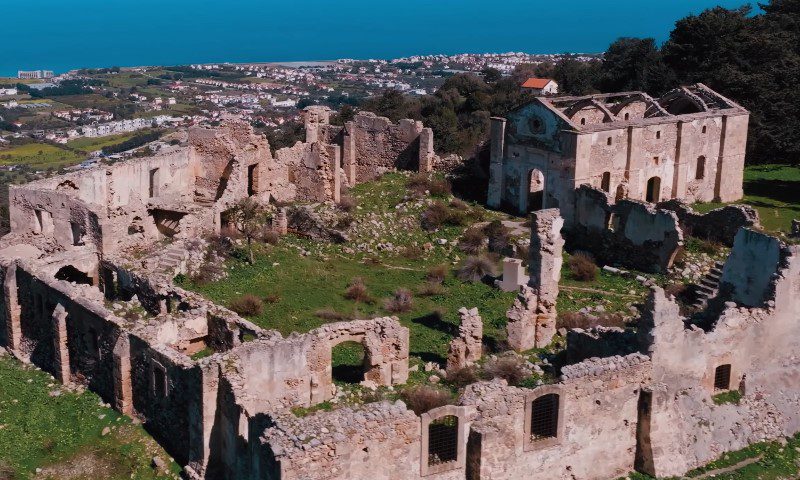
Venetian rule is especially important between 1489 and 1571. During this period, defense shaped architecture.
Fortified cities, heavy masonry walls, bastions, and geometric planning became central features.
Key elements show how military control shaped urban design:
- Thick stone walls created physical protection around important cities.
- Defensive bastions improved visibility and military response.
- Fortified urban centers organized daily life around security.
- Geometric planning supported enclosure, order, and control.
Powerful walls and bastions still shape Cypriot cities. Structurally, Venetian masonry is durable and strong in compression.
Heavy stone can resist weathering and military attack. However, earthquake performance is more difficult.
Heavy walls increase seismic mass and can fail during lateral shaking.
Main vulnerabilities include out-of-plane wall failure, cracking, weak connections between masonry sections, and settlement in older foundations.
Venetian architecture shows how military needs came before earthquake safety.
Ottoman Courtyards, Privacy, Shade, and Local Materials
Ottoman influence shaped Cyprus between 1571 and 1878.
Domestic architecture focused on privacy, family life, shade, and enclosed outdoor space.
Key features included:
- internal courtyards
- arched doorways
- timber elements
- stone
- clay
- mudbrick
- wood
- narrow streets
- shaded domestic areas
Domes and vaults appeared in religious and public architecture.
Courtyard design answered several daily and climate needs:
- Private outdoor rooms supported family life.
- Thick walls helped control indoor temperature.
- Small openings reduced heat gain.
- Narrow streets increased shade and comfort in the Mediterranean climate.
Seismic risk was significant. Mudbrick and unreinforced masonry are highly vulnerable in earthquakes.
Timber floors and roofs can add flexibility, but only when properly connected to walls. Irregular courtyard plans can increase torsional movement during shaking.
Older Ottoman-period buildings often need reinforcement that protects historic character while improving safety.
Traditional Cypriot Vernacular Intelligence
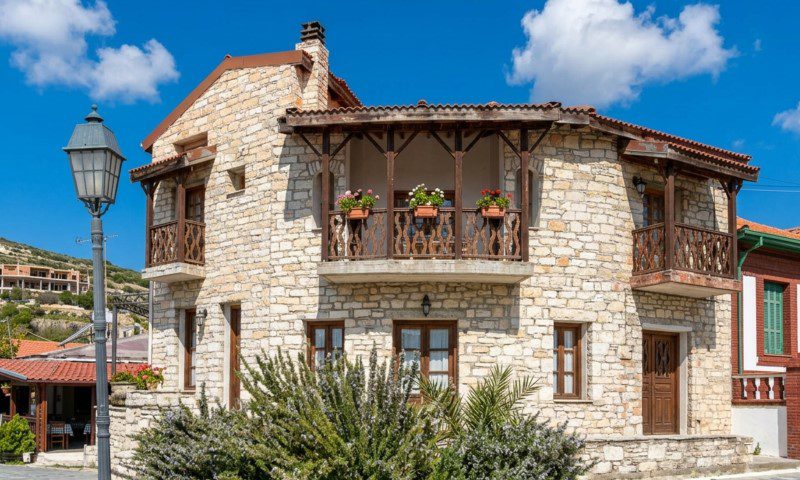
Traditional Cypriot architecture is especially visible in villages and mountain settlements such as Lefkara, Omodos, and Troodos-area communities.
Key elements include warm yellow limestone, red tiled roofs, internal patios, wooden shutters, wooden balconies, kamares, compact village layouts, and narrow shaded lanes.
Yellow limestone can take on a golden tone at sunset.
Kamares work as both decorative and structural arches. Patios support private family life and natural cooling.
Several traditional features also carry practical environmental value:
- Thick walls provide thermal mass.
- Courtyards support shade and airflow.
- Wooden shutters reduce sun exposure.
- Narrow lanes create cooler walking conditions.
Research on Cypriot vernacular dwellings supports the value of traditional climate design.
Shaded spaces, courtyards, thick walls, and local materials improve thermal performance and respond to daily comfort needs in local climate conditions.
More systematic recording of these passive design responses is also important, because older Cypriot houses contain practical lessons for current construction.
Structural weaknesses still matter. Thick stone walls increase building weight. Arches carry vertical loads well, but lateral earthquake movement can damage them.
Timber balconies require secure anchoring. Roofs can fail when wall-to-roof connections are weak.
Careful retrofitting should improve wall ties, roof diaphragms, foundations, and lateral stability without erasing historic materials or craft.
British Colonial Administration, Infrastructure, and Planning
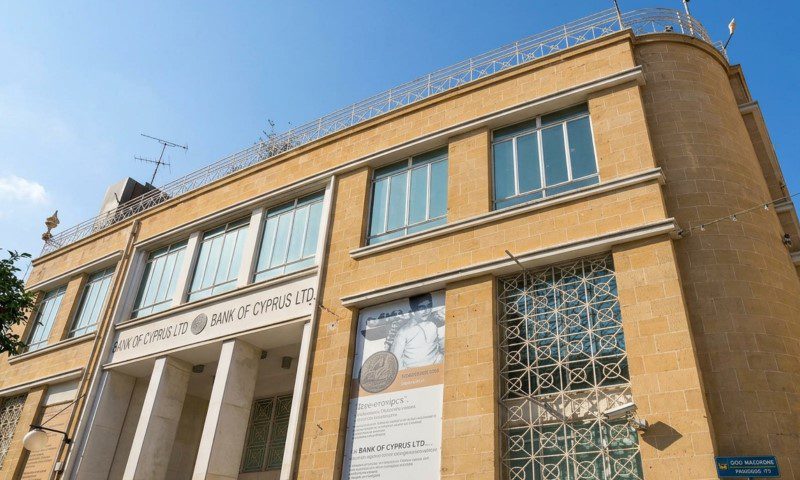
@wonders.archive Colours of Cyprus – Architecture Part 2 📍Nicosia The buildings showcased are what can be classified as traditional Cypriot architecture from the early 1900’s, which was mainly influenced by a unique mixture of styles while still maintaining its distinctive local character. Ottoman architecture being part of the islands past has left a mark on intricate and delicate patterns, arches and domes. British Colonial architecture introduced elements of Western architecture in stone construction techniques, pitched roofs. Neoclassical architecture, drawing heavily from Ancient Greek and Roman style, featured in columns, symmetrical facades and ornate detailing. Vernacular architecture, despite the external influences, Cyprus retained its vernacular roots. Local materials such as stone, clay and wood were used and the buildings adapted to the island’s climate, often featuring courtyards and shaded places to combats the heat. (Ask locals about the famous Lefkara stone or Tochni stone and you can see his prevalent this is still) Mediterranean style elements of the well-known idyllic coastal building can also be observed in the form of flat roofs, blue or green accents and whitewashed walls. #architecture #meditteranean #britishcolonial #cyprus #cyprusarchitecture #history #nicosia #oldtownnicosia #neoclassical #buildings #historicalbuilding #island #expat #expatlife #property #foryou #reels #greece #summer #islandlife #architecturephotography #traditionalarchitecture
British rule lasted between 1878 and 1960, with Cyprus formally becoming a British colony in 1925.
More than 700 British colonial buildings and structures are estimated to survive.
British influence appeared in government buildings, schools, churches, hotels, sanatoria, police buildings, railway stations, roads, and public infrastructure.
Major examples include:
- Old Government House, now the Presidential Palace
- The government cottage in Troodos
- Paul’s Anglican Church
- Berengaria Hotel
- Kyperounta Sanatorium
Colonial styles and planning approaches varied across the period:
- Bungalow colonial design appeared in early government housing.
- Victorian eclecticism and Victorian Gothic shaped some public and religious buildings.
- Georgian and Victorian details appeared in official architecture.
- Post-war functional design became more common after World War II.
- Tropical architecture influenced ventilation and shade features.
British impact was strongest in infrastructure, planning, housing, administration, education, and public works.
Post-Independence and Greek-Cypriot Identity, Urban Growth, and Concrete
Independence in 1960 changed building practice.
Nation-building, public institutions, urban growth, and housing demand increased construction in Nicosia, Limassol, Larnaca, and Paphos.
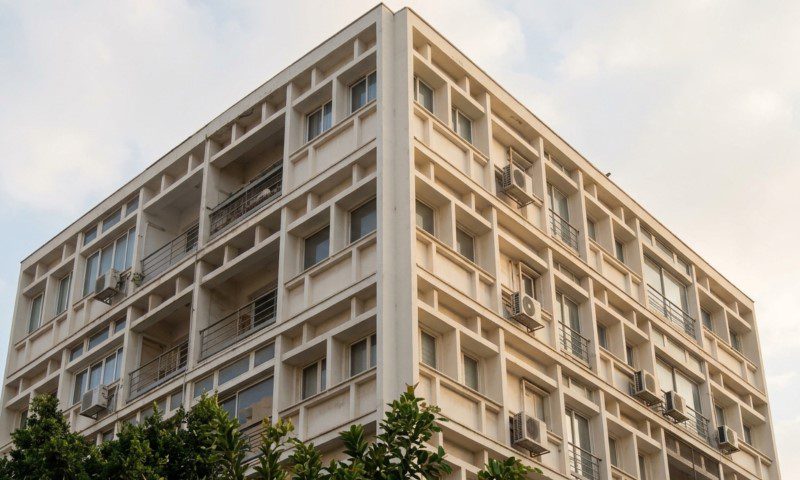
Architecture after independence often used modernist forms, reinforced concrete frames, balconies, Mediterranean references, stone cladding, and decorative arches.
Construction moved away from traditional load-bearing stone and mudbrick toward concrete-frame buildings with masonry infill.
Reinforced concrete changed urban construction in several ways:
- Taller buildings became easier to build.
- Larger spans allowed more flexible interior layouts.
- Faster construction supported housing demand.
- Apartment blocks became common in expanding cities.
Seismic performance depends on engineering quality. Reinforced concrete can perform well when properly designed and detailed.
Older buildings may have soft ground floors, poor reinforcement detailing, corrosion, heavy masonry infill, irregular plans, and later additions.
Post-independence architecture represents modernization, but safety depends on design standards, construction quality, maintenance, and building age.
Contemporary Cyprus Architecture
Contemporary architecture in Cyprus contrasts sharply with older heritage settings.
New projects often use reinforced concrete, steel, large glazing, panoramic windows, high-rise residential towers, luxury developments, villas, and self-contained residential complexes.
Just to see what kind of expansion we’re witnessing today, Cyprus building permits increased by 19.5% in 2025, reaching 8,159 permits compared with 6,827 in 2024.
Total permit value rose 37.8%, total area rose 41.0 percent, and planned residential units rose 42.7%.
At the same time, the developers compete to meet high European expectations for quality, technology, comfort, and energy performance.
Buyer expectations have changed. Many buyers now value lifestyle, aesthetics, comfort, connection to nature, views, and amenities, not only floor area.
Current development creates several technical demands:
- Tall buildings require advanced seismic and wind engineering.
- Coastal buildings need protection against salt exposure, corrosion, and waterproofing failure.
- Large glass façades need careful detailing for heat gain, wind pressure, movement, and seismic drift.
- Complex residential projects require long-term maintenance planning.
Design tension is clear. Historic Cyprus relied on stone, shade, shutters, patios, compact streets, and thick walls.
Modern Cyprus often relies on glass, height, mechanical systems, amenities, and market image.
What Is Different About Building in Cyprus Today
Building in Cyprus requires seismic risk to be treated as a core design issue.
Engineers must account for lateral loads, ductility, reinforcement detailing, soil conditions, foundations, load paths, and building irregularities.
Eurocode 8 supports this approach because it applies to buildings and civil engineering works in seismic regions.
Its main goals include protecting human life, limiting structural damage, and keeping important civil protection structures operational after earthquakes.
Climate-responsive design also matters.
Traditional buildings already solved many heat problems through courtyards, shaded patios, shutters, thick walls, and narrow streets.
Modern design can combine these strategies with insulation, energy modeling, solar control, high-performance glazing, and efficient mechanical systems.
Current construction must address several connected priorities:
- Seismic safety in a known earthquake zone.
- Comfort in a hot Mediterranean climate.
- Energy efficiency and European standards.
- Heritage protection during repair or adaptive reuse.
- Accurate planning, approvals, and legal documentation.
Energy efficiency has greater importance. Buyers and developers expect higher quality, better technology, comfort, and lower energy use.
Heritage buildings require technical and legal caution.
Older stone houses, colonial buildings, and structures with undocumented alterations need document review, structural inspection, and sensitive repair.
Old and new materials behave differently. Historic buildings used limestone, mudbrick, clay tiles, timber, arches, and thick masonry.
Modern buildings use reinforced concrete, steel, insulation systems, waterproofing, glazing, and mechanical equipment. Renovation must account for how these systems interact.
Planning and documentation are also more important.
Current construction must address approvals, structural design, energy performance, services, safety, legal records, and heritage rules.
FAQs
Closing Thoughts
Cyprus architecture records empire, climate, craft, technology, planning, and seismic risk. Venetian architecture shows defense and heavy masonry.
Ottoman and traditional Cypriot architecture show courtyards, privacy, local materials, shade, and passive cooling.
British colonial architecture added public buildings, infrastructure, planning systems, schools, and early reinforced concrete examples.
Post-independence architecture brought urban growth and widespread concrete construction.
Contemporary architecture adds towers, luxury projects, energy expectations, and lifestyle-based real estate.