
Say the word “Balkans” to most people and you’ll get a shrug, or maybe a vague mention of wars they can’t quite place in time. That’s fair.
Few regions on earth pack this much history into such a small stretch of land – empires rising and collapsing, borders redrawn every generation or two, languages and religions overlapping in ways that still confuse outsiders today. If you’ve ever tried to read about the region and come away more confused than when you started, you’re not alone.
This guide won’t turn you into a historian overnight. What it will do is give you the backbone – the chain of events that explains why the Balkans look and feel the way they do, and why understanding even a little bit of this history makes traveling through the region so much richer.
Where Does Balkan History Actually Begin?
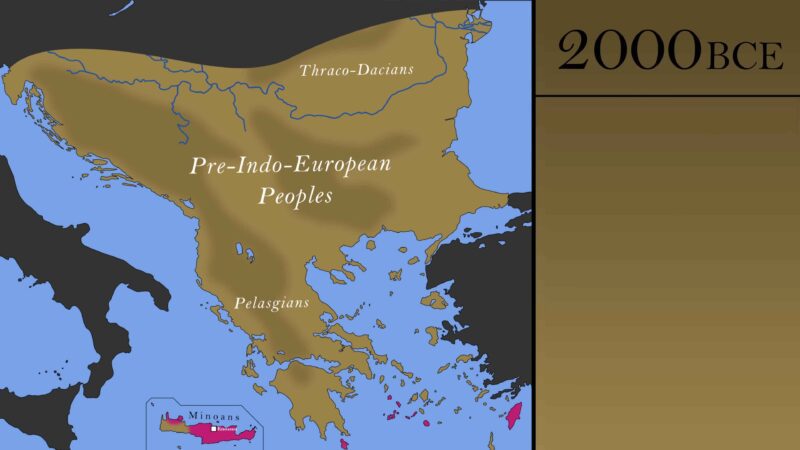
Long before anyone used the word “Balkans,” the peninsula was home to the Illyrians in the west and the Thracians in the east – tribal peoples who left behind fortresses, burial mounds, and not much else in writing. Then came Rome. By the 1st century AD, the whole peninsula was Roman territory, crisscrossed by roads that are still visible in places today.
When the empire split, the Balkans found themselves on the fault line between the Latin West and the Greek-speaking Byzantine East – a division that, in many ways, never fully healed.
The next big shift arrived with the Slavic migrations of the 6th and 7th centuries. Slavic tribes settled across the peninsula, mixing with existing populations and eventually forming the ancestors of today’s Serbs, Croats, Bulgarians, and others. By the medieval period, you had a patchwork of kingdoms and principalities – the Bulgarian Empire, medieval Serbia under the Nemanjić dynasty,
Croatian kingdoms tied increasingly to Hungary (today one of the best places in Europe you can visit for Christmas holidays), and Bosnia carving out its own identity in the mountainous interior.
The Ottoman Centuries
This is the part of the story most people have heard of without quite knowing the details. Starting in the late 14th century – the Battle of Kosovo in 1389 is the symbolic turning point – the Ottoman Empire pushed into the Balkans and, within a century, controlled most of the peninsula. Ottoman rule lasted, in some areas, for nearly five hundred years.
That’s not a footnote. Five centuries is long enough to reshape a region’s food, architecture, vocabulary, and religion.
It’s why you’ll find mosques standing next to Orthodox churches in Bosnian towns, why Turkish loanwords sit comfortably inside Serbian, Bulgarian, and Macedonian, and why coffee is still served the same slow, grounds-and-all way from Sarajevo to Skopje.
The north of the region tells a different story – Croatia and Slovenia stayed largely under Habsburg Austrian control, which is why their towns look distinctly Central European, all pastel facades and church spires, rather than Ottoman.
A Town That Still Shows This Layering
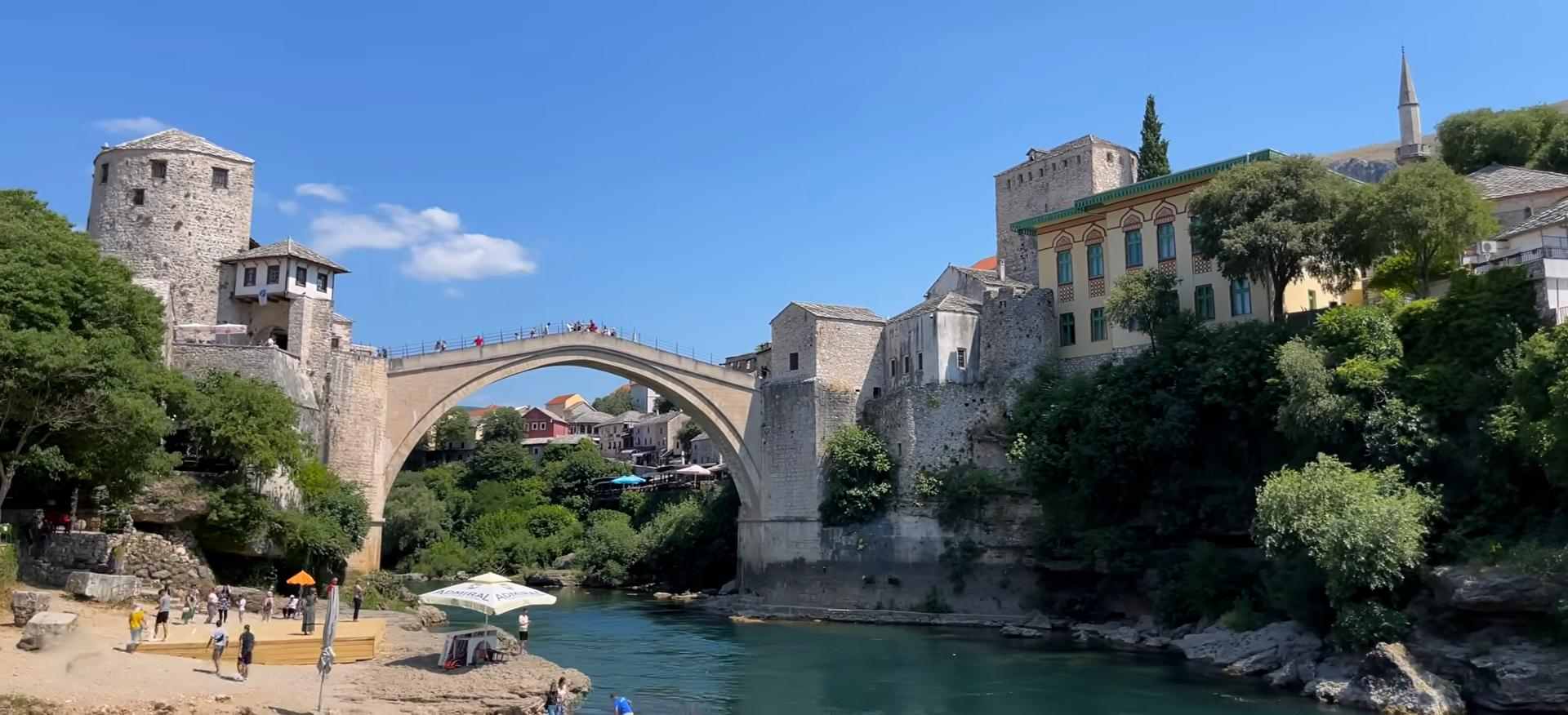
This is the part of the history you don’t just read about – you can walk through it. One of the advantages of the Balkans as a travel destination is how compressed the history is geographically: you can go from a Habsburg-era town square to an Ottoman-era stone bridge in the space of a single day’s drive.
Take Livno, in the western part of Bosnia and Herzegovina, sitting on the edge of the vast Livanjsko Polje karst field. It’s a town that carries visible layers of exactly the history described above – a medieval fortress, Ottoman-period architecture in the old core, and a landscape shaped by both empire and geology.
It’s also conveniently positioned between the Adriatic coast and Bosnia’s interior, which makes it a natural stop for anyone tracing this region’s story overland rather than just reading about it.
Getting there without a rental car is easier than people expect. Livno-Bus runs regular routes connecting Livno with major hubs along the coast and further inland, which means you don’t need to plan an elaborate itinerary just to see one of the region’s more overlooked historical towns.
For a lot of travelers, it ends up being the stop that makes the rest of the trip click into place – the point where Ottoman heritage and Habsburg influence sit within walking distance of each other.
The 19th Century: Nations Waking Up
The story doesn’t end with the Ottomans, though. By the 1800s, Ottoman power was fading, and something new was stirring – nationalism. Serbia won autonomy and then independence through uprisings in the early part of the century. Greece broke away. Bulgaria followed later.
Each new state defined itself partly by throwing off Ottoman rule and partly by claiming a shared language, religion, or ancestry with its neighbors – which is exactly where things got complicated, because these claims constantly overlapped.
The two Balkan Wars of 1912 and 1913 were the messy climax of this process, as the newly independent states fought first the Ottomans and then each other over what remained of Ottoman territory in Europe. And then, in June 1914, a Bosnian Serb nationalist shot Archduke Franz Ferdinand in Sarajevo – the spark that set off the First World War.
It’s worth sitting with that for a second: one of the most consequential single events of the 20th century happened in a Balkan city, over a Balkan dispute.
Yugoslavia: Union, Then Collapse
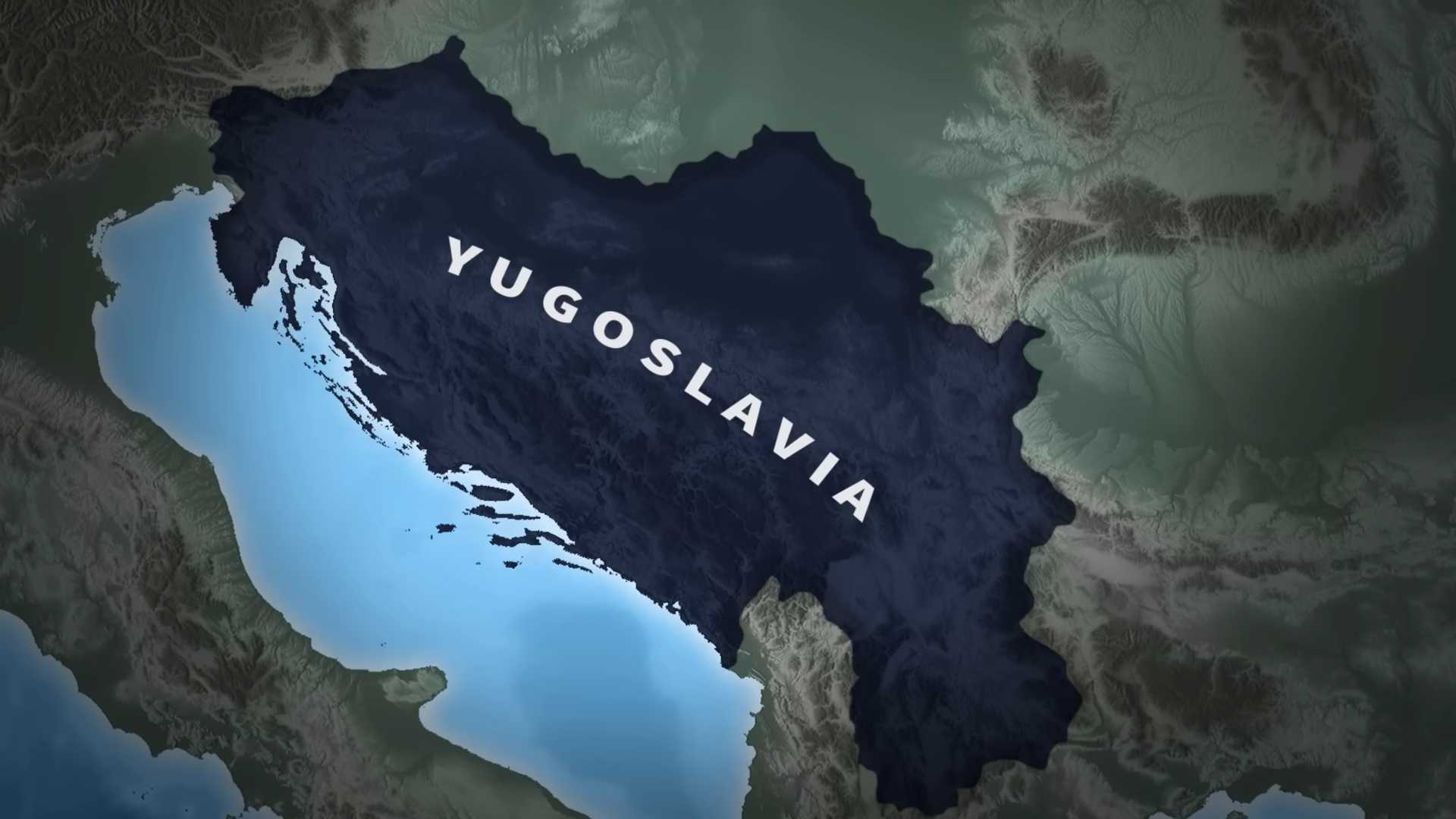
After the First World War, several Balkan and South Slavic peoples were folded into a new state – eventually named Yugoslavia. It survived the interwar years, was torn apart during the Second World War, and then re-emerged under Josip Broz Tito as a socialist federation that, unlike its neighbors, stayed independent of Soviet control.
For decades, Yugoslavia was held up as a relatively successful multi-ethnic experiment – open borders with the West, a growing economy, and a careful balancing act between its different republics and peoples.
That balance depended heavily on Tito himself (one of the greatest leaders of that time, said by many Balkan citizens). After his death in 1980, old tensions resurfaced, and by the early 1990s the federation broke apart in a series of wars – in Slovenia, Croatia, Bosnia and Herzegovina, and later Kosovo – that left deep scars still visible in the region’s politics and memory.
Slovenia and Croatia have since joined the European Union; Serbia, Bosnia, Montenegro, North Macedonia, and Kosovo remain at various stages of that same, often slow-moving process.
Why Any of This Still Matters
The Balkans get reduced, too often, to a single word – “conflict” – as if that’s the whole story. It isn’t. What’s actually there is a region where Roman roads, Ottoman bridges, Habsburg train stations, and Yugoslav-era apartment blocks sit within a few kilometers of each other, each one a leftover from a different chapter.
Once you know roughly how those chapters fit together, the region stops looking chaotic and starts looking like exactly what it is: one of the most historically dense corners of Europe, and one that rewards anyone willing to look a little closer.