
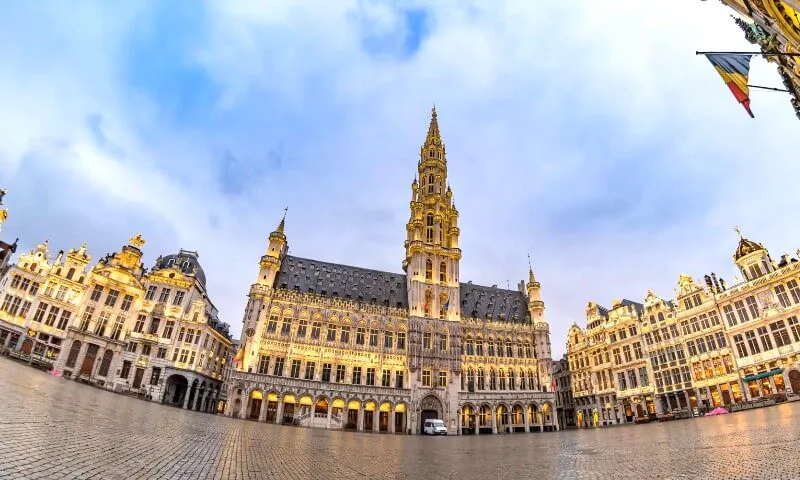
Grand Place has the rare ability to stop a busy city in its tracks. Visitors arrive through a narrow street, step onto the cobbles, and suddenly face a wall of Gothic stone, Baroque curves, gilded figures, and steep gables.
Its beauty grew from a medieval market, wealthy craft guilds and a remarkably fast recovery after French forces devastated central Brussels in 1695.
Known as Grand-Place in French and Grote Markt in Dutch, the square has kept roughly the same form for centuries.
UNESCO added it to the World Heritage List in 1998, recognizing its blend of styles and its value as a record of a prosperous northern European trading city. The setting feels theatrical because generations of Brussels residents consciously made it so.
A Market Grew Beside the Senne
Grand Place began as the Lower Market, or Nedermarckt, on reclaimed marshland near the Senne River. From La Bourse Hotel near the Grand Place, visitors can approach the former market area through streets that remain part of Brussels’ active commercial center.
The city’s historical timeline records its first written mention in 1174. Location shaped its purpose: ducal power occupied higher ground, while merchants gathered below to sell bread, meat, cloth and other everyday goods.
Wooden stalls and halls gradually gave way to stone houses. By the 13th and 14th centuries, affluent families had built residences known as steenen around the market. Celebrations, performances, official announcements and executions took place where traders weighed food and negotiated prices.
Trade guilds moved into surrounding houses during the 15th century. Their façades became advertisements in stone and gold, with professions represented through sculpture, emblems and patron saints.
Two Buildings Set the Square’s Rhythm
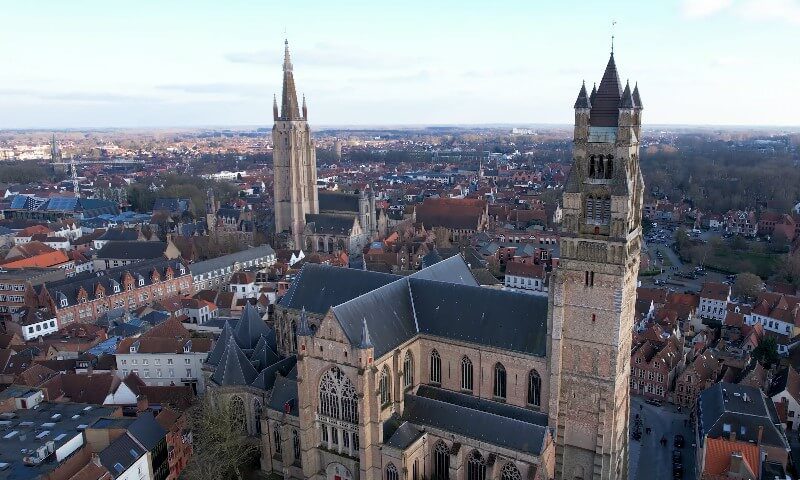
Two public monuments face one another across the cobbles. Their different histories explain why Grand Place combines medieval gravity with later architectural fantasy.
The Gothic Town Hall
Brussels laid the first Town Hall stone in 1401. Construction continued in phases throughout the 15th century, producing its famous asymmetry. The tower rises between wings of unequal length, an irregularity that gives the façade a lively balance.
At 96 metres, the tower leads the eye to a gilded statue of Saint Michael, Brussels’ patron. The Town Hall’s official history notes that its walls and tower survived the fire of 1695, although the interior burned. Municipal government still operates inside.
The King’s House, or Bread House
Across the cobbles stands a building with two names and an easily misread royal title. Broodhuis, its Dutch name, recalls the 13th-century bread market. Maison du Roi, the French name, refers to the sovereign title held by the Dukes of Brabant; Charles V owned the site as King of Spain. The royal residence was elsewhere.
The lace-like building dates largely from the late 19th century. Work beginning in 1873 replaced an older structure with a neo-Gothic reconstruction.
According to the Brussels City Museum, its central tower reaches 38.49 metres. The building now houses the museum, including the original 17th-century Manneken-Pis statue.
The Night Grand Place Burned
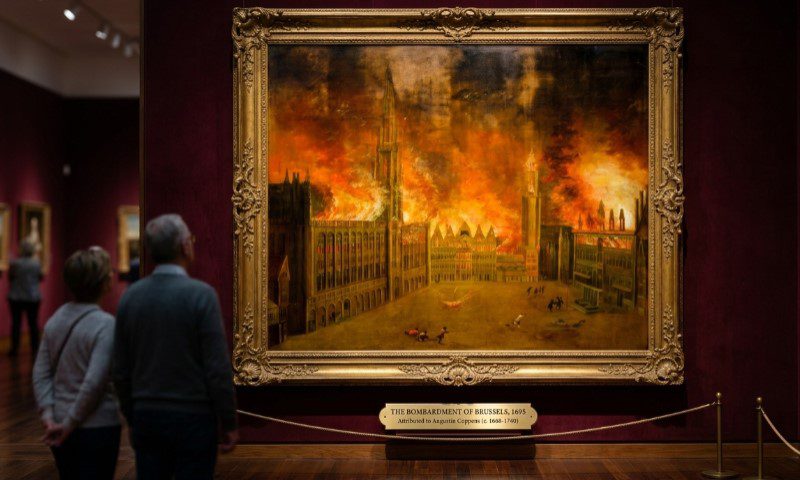
From 13 to 15 August 1695, French troops acting under great leader Louis XIV bombarded Brussels during the Nine Years’ War.
Marshal de Villeroy hoped the attack would draw Allied forces away from the siege of French-held Namur. The strategy failed, while cannon fire, mortars and flames wrecked much of the lower city.
An anonymous painting held by the museum shows Grand Place in flames. Residents largely escaped after receiving warning, yet buildings and artistic treasures suffered enormous losses. Parts of the Town Hall, the King’s House and a handful of façades remained standing.
The destruction created a difficult choice. Brussels could reproduce the narrow plots and expressive gables associated with its guilds, or impose the straight lines and uniform classical fronts preferred by the governor of the Spanish Netherlands. The rebuilt square became a negotiated answer.
Guilds Rebuilt a Civic Stage
View this post on Instagram
Owners and guilds began reconstruction quickly, with many houses rising in 1697 and 1698. City authorities reviewed plans and demanded visual harmony across dozens of individual properties.
Similar heights and repeated window lines hold the composition together, while every guild house retains its own silhouette.
The west side favors richly decorated buildings. Names such as The Fox, The She-Wolf, The Sack and The Horn identified houses before street numbers. The Horn’s upper façade resembles a ship’s stern, a fitting emblem for the boatmen’s guild. Gilded signs worked much like shop logos across a crowded market.
The east side follows a more orderly vision. The House of the Dukes of Brabant resembles one grand palace, although its classical façade covers seven properties. A history of the reconstruction describes the result as a compromise between guild individuality and the governor’s preference for regularity.
Baroque dominates the guild houses, joined by classical, local and Italian Renaissance influences. Repeated materials, proportions and gilded accents create unity beside the Gothic Town Hall. UNESCO later identified that successful mixture as a defining quality.
The Grand Place Visitors See Includes the 19th Century
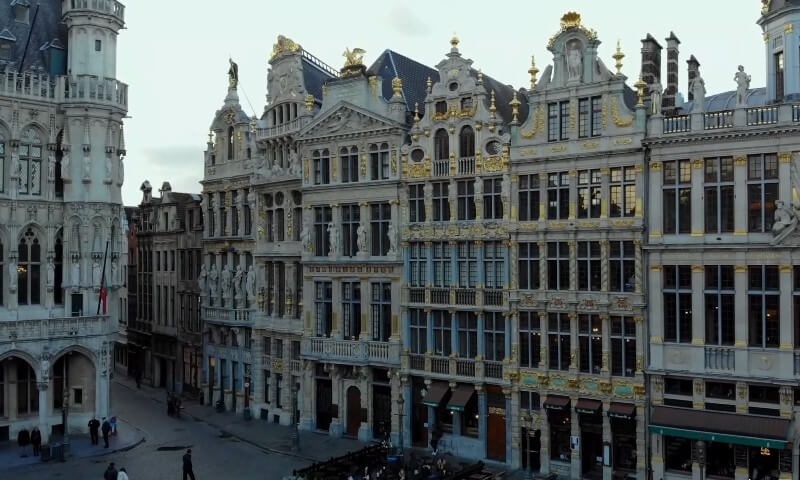
Major restoration campaigns began in the 1840s, when city leaders repaired façades and replaced missing ornament using engravings and historical records. The King’s House was rebuilt, Town Hall statues were recreated, and several guild houses received substantial intervention.
Conservation continued block by block. The Town Hall and King’s House gained legal protection in 1936, every façade followed in 1977, and protection expanded to the interiors in 2002. Later façade restoration campaigns ran into the 21st century.
Grand Place preserves several layers at once: medieval street form, a 15th-century civic monument, late 17th-century guild architecture and 19th-century restoration. Its authenticity reflects the long effort to maintain the ensemble as Brussels changed around it.
How to Read the Square on a Visit
An early-morning visit offers space to study the façades before tour groups fill the center. Begin near the middle and turn slowly. The Town Hall sets the vertical scale, the King’s House answers with neo-Gothic detail, and individual guild rooflines fill the gaps.
Look upward for names expressed as images: a fox, swan, star or boat-like gable. Step closer for dates, patron saints and gilding. After sunset, warm lighting separates statues from dark stone.
Grand Place remains a working public space. The mayor and aldermen use the Town Hall, while concerts, civic celebrations and the biennial Flower Carpet keep the cobbles active. The square’s continuing civic role follows its oldest tradition: Brussels still gathers here to celebrate and be seen.
A Square Built by Collective Memory
Grand Place earns its reputation through the relationship between its buildings. Merchants competed for attention, officials imposed order, restorers recovered lost details and public life kept returning to the cobbles. Reconstruction after war gave Brussels a powerful visual identity.
The finest view comes after the first astonishment has passed. Once the gold and stone resolve into separate façades, the square reads like a city archive: bread market, council chamber, guild sign, fire scar and festival stage, all sharing one extraordinary frame.